
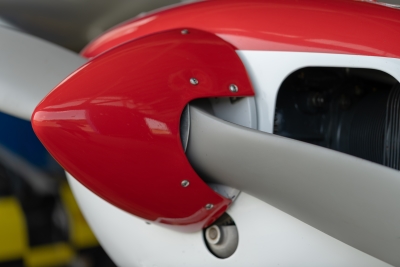
Aircraft Maintenance
Airspeed Aviation Ltd is a CAA Approved Light Aircraft Maintenance Company, located at Derby Airfield (EGBD) in the centre of England.
We have held continous approval since 1982, and are currently CAA Part CAO & BCAR M3 approved, allowing us to maintain all types of fixed wing light aircraft.
Airspeed Aviation Ltd can offer any form of service to any UK registered light aircraft (upto 2730kg);
- Schedule maintenance
- ARC Renewals
- AMP development & certification
- Routine servicing
- Avionics
- Performance improvements
- Engine overhauls & components
- Defect rectification - airframe, engines, electric's etc.
- Aircraft pre-purchase surveys
- Modifications
- AD & SB compliance
- Magneto repair, service & overhauls
- Fabric covering
- Compass swings
- Dynamic propeller balancing
- Aircraft weighing
- Repairs - both major and minor
- Parts supply - new & used
- Used part & component inspection & recertification
- LAA Permit aircraft support
Just about anything you require, we have a dedicated team including two full time licenced engineers who are also LAA inspectors.
We can also support FAA (N reg) registered aircraft for all routine maintenance & avionics.
We pride ourselves on our attention to detail, thoroughness and cost effectiveness. We aim to give the best service possible and enjoy the satisfaction of a job well done.
Contact us for any of your requirements.
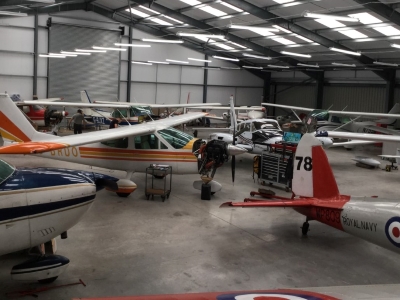
Inside our Maintenance Workshop
Facility
We have an over 10,000sqft purpose built maintenance hangar facility, with separate workshops for engine & component work, plus full use of our own airfield.
Having been trading for many years (since 1982), we have collected a vast amount of experience and equipment, and have a large stock holding of spare parts.
We can supply aircraft parts at very competitive pricing - if you need anything please contact us.
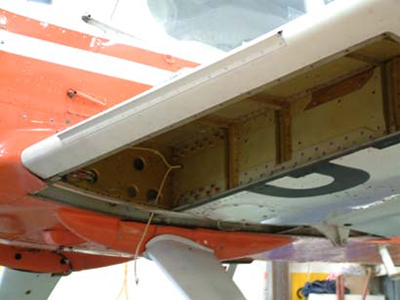
Beagle Pup Fuel Tank Repair in Progress.
Specialities
We are specialists in a number of aircraft types, and offer full expert support for this types, including holding stocks of hard to find spares.
- Cessna 177 Cardinal aircraft - particularily the retractable versions. If you are having any issue with yours - why not give us a call?
- Beagle B121 Pups & Bulldogs - over the years we have seen dozens of these delightful British aircraft.
- DeHavilland DHC1 Chipmunk - we work closely with DH Support to help our owners keep these beautiful aircraft airworthy.
Any questions about these, and any other aircraft, just ask... we are here to help.
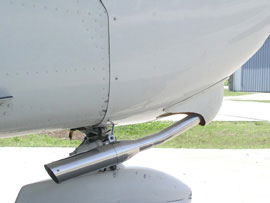
Power Flow Tuned Exhaust installed to a Cessna 172
Performance Modifications
Airspeed - the name for performance modifications.
For most light aircraft there is a modification available which will enhance the aircraft's performance, efficiency & safety. We have gained numerous approvals to allow installation of this parts to UK registered aircraft.
We can supply and install the following example products:
- Power Flow tuned exhaust systems for some Cessna & Piper models
- Challenger Performance air filters using K&N filter technology
- Cessna Flap Gap Seals
- Improved seat harnesses including inertia reel systems
If you have any queries about any performance or safety modification - contact us.
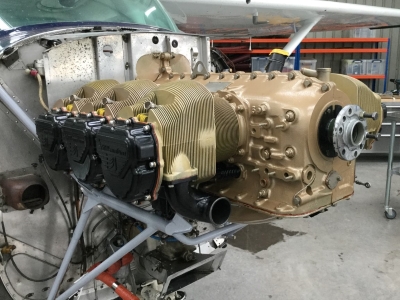
Continental O-470 being refitted following repair
Engine & Components
We are approved to carry out engine overhauls & repairs for most piston engines fitted to light aircraft, including all Lycoming & Continental piston engines.
Magnetos - from simple defect rectification, service bulletin compliance, 500hr inspections and overhauls.
Full support for vintage & classic engines and parts, such as the Gipsy Major and BTH magnetos.
Alternator & generator repairs & bench testing
Hydraulic system components, including undercarriage legs, brake units, undercarriage actuators and power packs.
Component inspection, repairs and re-certification
Avionics unit bench testing and software updates - including factory support for Garmin & Trig units.